Overview:
In recent years,frequent geological disasters caused by long-term groundwater impacts(e.g.,subsidence funnels,land subsidence,ground fissures,karst collapses,seawater intrusion,and water quality pollution)have highlighted the urgent need to improve the comprehensiveness and accuracy of groundwater monitoring.While groundwater monitoring has developed alongside socio-economic progress,evolving global climate conditions and water resource challenges demand new solutions.Establishing a long-term groundwater monitoring network,enhancing automated monitoring capabilities,strengthening information services,and advancing applied research are essential for scientifically protecting groundwater resources,ensuring sustainable utilization,and supporting socio-economic development.
System Structure:
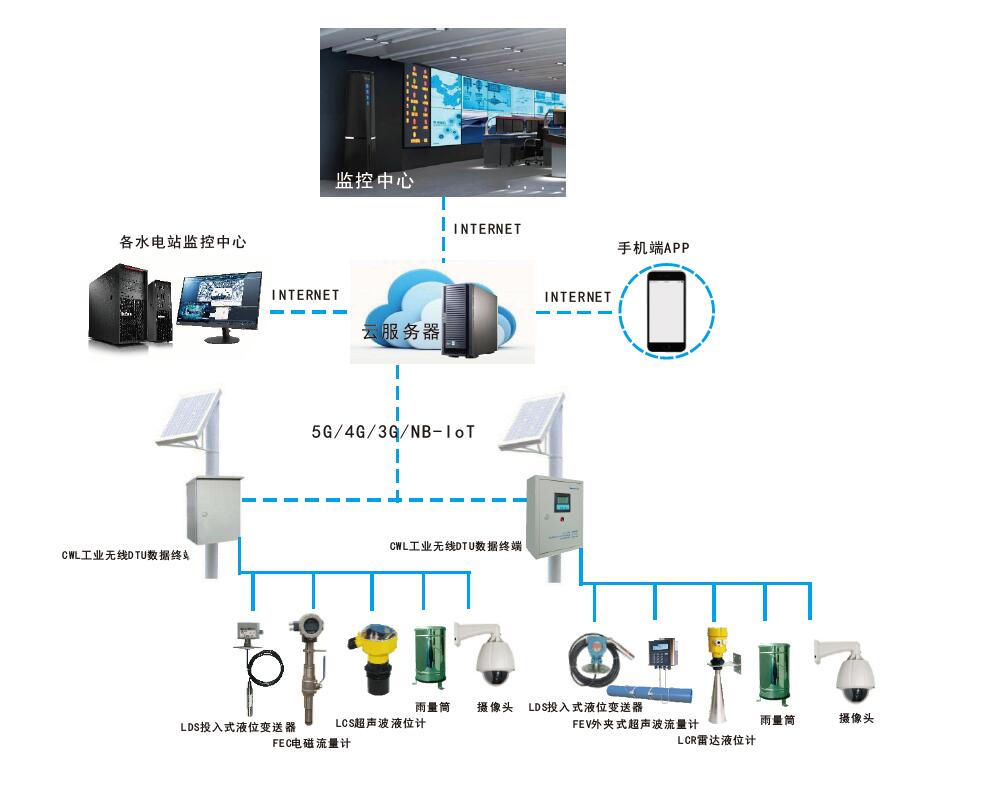
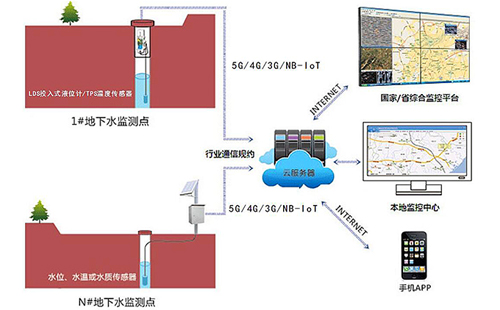
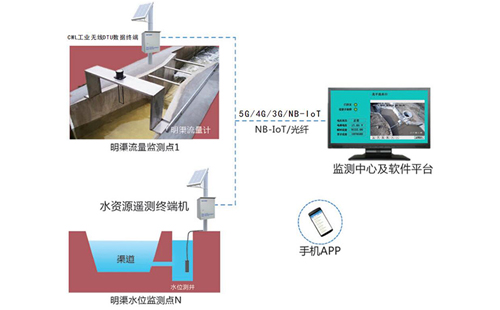
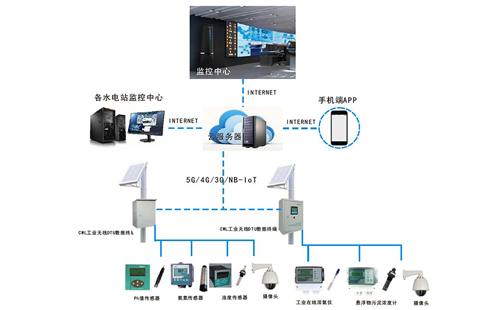
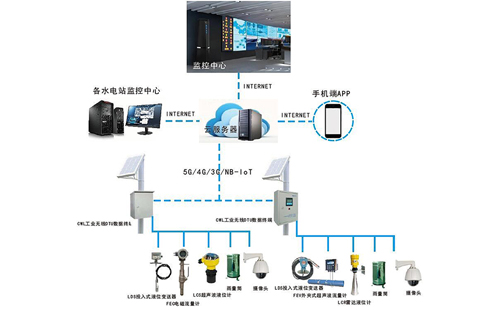
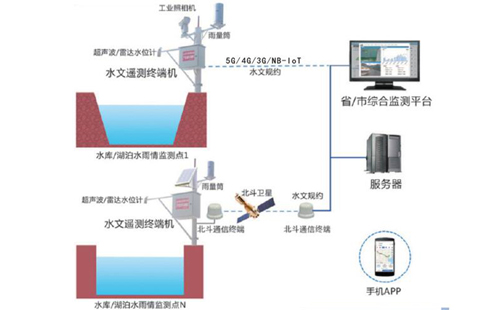
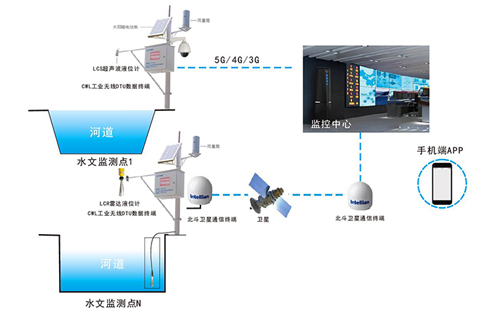
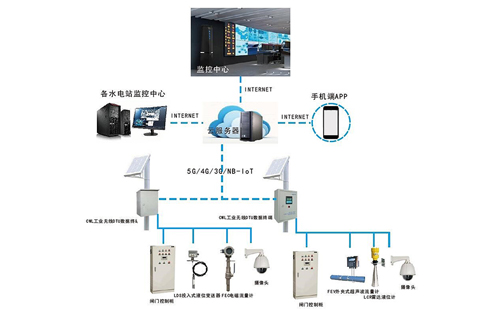
The system consists of front-end monitoring devices and a central monitoring platform.Data communication between front-end devices and the central platform is achieved via 3G/4G/5G wireless transmission to the central server room over the public internet.
Front-End Devices:
Integrated water level gauges with built-in lithium batteries,compact in size and suitable for deployment in remote field locations.
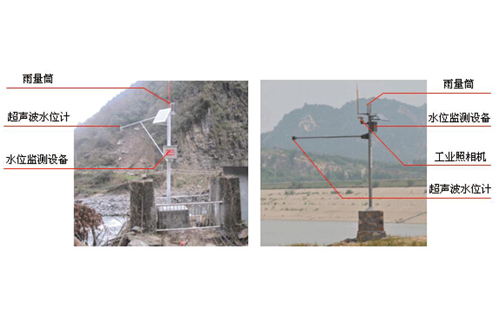
Monitoring stations require no dedicated buildings;only PVC/galvanized pipe monitoring wells are pre-installed,protected by outdoor equipment boxes.
Water Level Measurement Principle:
Based on hydrostatic pressure principles,where pressure correlates with water depth.Pressure-sensitive integrated sensors measure the water column pressure at fixed underwater points,enabling indirect water level calculation by adding the point’s elevation.

System Functions:
Automatic Data Collection:
Accurately and reliably captures real-time groundwater level,flow,quality,and temperature data.
Proactive Alarm Reporting:
Automatically alerts the monitoring center for on-site anomalies(e.g.,unauthorized cabinet access,power failure,device malfunctions).
Metering Device Monitoring:
Remotely tracks metering point operations,identifies faults,and detects abnormal metering.
Statistical Analysis:
Supports daily,weekly,monthly,and annual reports with charts(curves,histograms)to visualize monitoring station data.
Cost-Effective Networking:
Flexible communication interfaces allow users to choose economical network solutions,minimizing installation and maintenance costs.
High Reliability:
Hardware and software feature robust anti-interference capabilities,ensuring uninterrupted operation and automatic recovery from faults.
Open Database Design:
Supports user-defined expansion of monitoring stations and sensors.
Real-Time Dispatch Updates:
Leverages advanced IT and communication technologies to share groundwater monitoring data and dispatching information with data distribution centers,enabling public resource integration.
The translation maintains technical accuracy while ensuring readability for professional contexts.Let me know if further adjustments are needed!